
Whoa!
I stumbled into Solana tooling recently and it grabbed my attention fast. Okay, so check this out—I’ve used a bunch of explorers over the years, and most feel kinda interchangeable until you need something specific. Initially I thought all explorers just show transactions, but then Solscan showed me how much richer an explorer can be when it blends visuals, analytics, and quick filters. Something felt off at first about parsing Solana’s speed; my instinct said that the right UI would have to surface inner instructions and program logs cleanly, not just dump raw JSON at you.
Seriously?
Yep—seriously. I watched a pending swap fail live and thought, wait—where did the lamports go? The transaction details on Solscan let me trace inner instructions and identify the exact token program call that reverted (very very useful when you need to blame the right thing). On one hand the UI is straightforward for new users, though actually it also has depth for power users who need CSV exports, API hits, or program-level reads. Initially I misread a log, and then I had an aha moment when I toggled the inner instruction view—suddenly the whole flow made sense and I could explain to my teammate what went wrong.
Hmm…
Here’s what bugs me about many explorers: they hedge too much on aesthetics and not enough on actionable data. I’ll be honest, I prefer messy utility over pretty dashboards when money’s at stake. On the other hand, too much raw detail can overwhelm non-technical folks, so the sweet spot is a clean default with optional deep dives (Solscan does that decently). My first impression was: neat, but can it scale to analysis for dozens of wallets? The answer turned out to be yes, because of wallet profiling and token holder views.
Wow!
Wallet profiling on Solscan lets you see token distribution and historical activity quickly. You can click into a wallet and get a sense of staking, delegated stake accounts, NFT holdings, and program interactions without fumbling through RPC calls. For analytics work I often export token holder lists to CSV and then pivot in my spreadsheet—this saves time when I need concentration of ownership stats for audits or reports. There was a time when I had to manually aggregate holders using on-chain queries, and lemme tell you, that was slow and annoying; solscan fixed that friction in a way that felt like a breath of fresh air.
Whoa!
Pro tip: always check the program ID and verified metadata before trusting a token page. Scammers will create lookalike tokens with similar names, and sometimes the UI doesn’t shout “fake” loudly enough. Use the token’s mint address, not the display name, when you audit balances or trace transfers—shortcuts here break trust. On one debugging session I traced a rug-pulled token through several intermediary wallets and found the same program was involved in multiple suspicious mints, which then gave me a pattern to flag other bad actors.
Really?
Really. You can also use Solscan to inspect contract/program source links when available, and to see recent interactions with that program, which helps build a behavioral profile. For NFTs, the explorer surfaces metadata and creators, enabling quick provenance checks (very useful when buying from marketplaces or doing due diligence). Something I do often is compare on-chain royalties and actual marketplace behavior; sometimes royalties are set on-chain but ignored off-chain—ugh, that part bugs me. (oh, and by the way…) you can sometimes find helpful clues in the transaction memo or in the account creation sequence.
Whoa!
Okay, so check this out—Solscan’s transaction visualizer is one of those features you don’t know you need until you do. It converts a messy stack of inner instructions into a readable flow, showing token swaps, CPI calls, and program returns with clear arrows. That makes post-mortem debugging far more efficient, especially when you’re juggling Serum, Raydium, and custom AMMs in the same transaction. My instinct said this would be overkill, but then it saved me hours when reconciling failed liquidations across multiple DEXs.
Hmm…
Cluster selection matters. Mainnet-beta, testnet, devnet—pick the right one before you start blaming code or infrastructure. I once spent an afternoon troubleshooting a behavior that existed only on devnet; not my proudest moment. On another occasion, toggling between confirmed and finalized states clarified why a wallet saw a different balance than an indexer—lamports move fast on Solana and confirmations matter. Initially I thought that was rare, but actually it’s more common during heavy load or when blocktimes jitter.
Whoa!
Search is underrated. You can search by signature, by account, by program, or by token mint and get immediate results. Developers will love using the API endpoints Solscan exposes when they need quick reads for dashboards or integrations. I’m biased, but having a solid explorer API reduces the temptation to hammer public RPC endpoints for light reads, which helps everyone. In real projects I often prototype UI elements by hitting the explorer API first, then switching to a dedicated backend once things stabilize.
Wow!
One caveat: explorers do not replace on-chain verification and careful auditing. They are tooling layers that help you interpret what already exists on-chain, but they can only be as honest as the data they present. On one hack-response I relied too much on a third-party label and had to double-check the raw logs to be sure—lesson learned. So use explorers for speed, but keep the habit of pulling raw account data when the stakes are high.
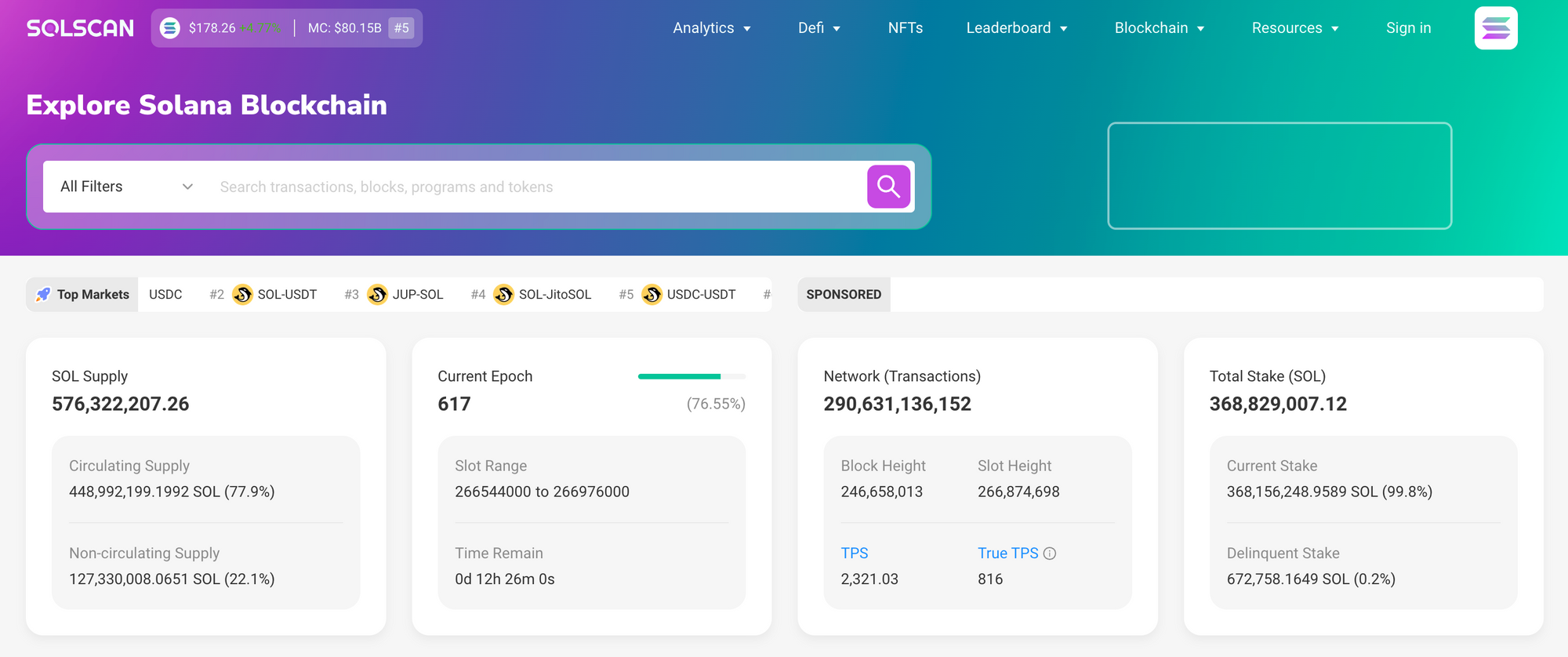
Where to start with solscan
If you want to try the specific explorer I keep recommending, check out solscan and poke around—look at transactions, program pages, and token analytics. Start by searching a known wallet or a transaction signature and open the inner instruction tab, then toggle logs and try exporting data to CSV for offline analysis. My workflow usually goes: identify signature, inspect inner instructions, confirm program ID, export holders if needed, and then file the findings into a short report for stakeholders. I’m not 100% sure about every edge case (no one is), but that routine covers most common needs and surfaces the weird exceptions quickly.
FAQ
How do I verify a token is legitimate?
Check the mint address first, review verified metadata on the token page, inspect the creator accounts and recent transfers, and look for community or marketplace verifications; if something smells off, trace the program interactions and holder concentration—high concentration in a few wallets is often a red flag. Also compare marketplace listings and on-chain royalty enforcement, and when in doubt, pull the raw account data (or ask someone in a trusted guild) before moving funds.